

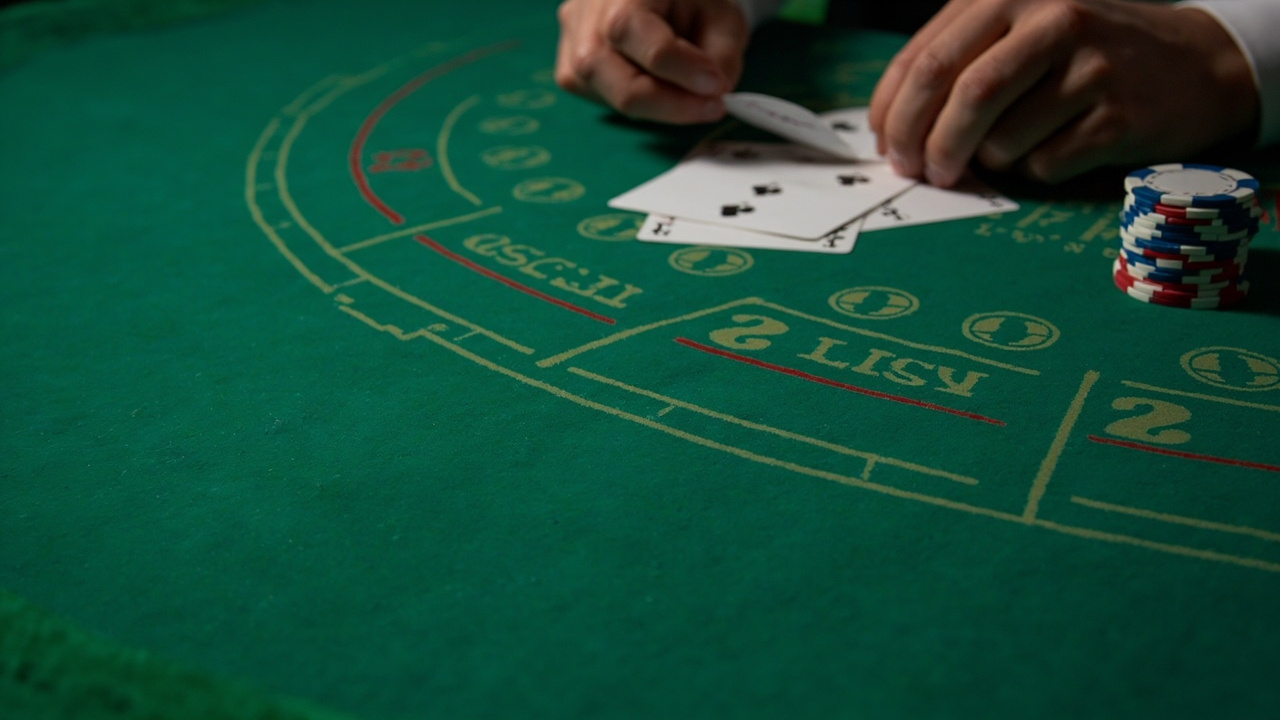
Most Aussie punters have seen the option pop up on a felt table or a phone screen and guessed at the timing. The real skill sits in knowing when doubling your stake actually pays off and when it quietly burns through a session bankroll. We put a few mobile-first operators through their paces to see how blackjack double down rules hold up outside the casino floor, starting with the basics that never change and moving into the practical stuff that decides whether a hand keeps you in the game or puts you on the sidelines.
The core mechanic stays straightforward across every deck. You double your original wager after seeing your first two cards, then receive exactly one more card and stand regardless of what it is. The move only makes sense when your total sits around nine, ten or eleven and the dealer’s visible card leaves them vulnerable, because you are buying a single decisive card at the cost of a full extra bet. Operators that keep the option visible and the timing clear tend to run smoother than those that bury it behind menus, and the clearest examples we tested even route their support through a quiet Hobart office that handles local queries without the usual overseas delay.
On mobile, the double-down prompt has to land before you tap anything else. A well-built table keeps the button thumb-friendly on a portrait screen, loads the animation in a single beat, and never shifts the layout while you are weighing a split or a stand. We watched a few sessions where a sluggish tap registration or a half-rendered card table turned a clean ten into a missed window, which is exactly why we weigh responsiveness as heavily as the underlying maths. Timing matters here the same way it does when you compare price movement against notes on Perth gambling forums, where slow transfers get flagged fast and players adjust their pace accordingly.
Hitting the right moment still depends on the cards, not the screen glow. A hard nine against a weak dealer card is the textbook opening, while a soft hand usually leaves you better off taking a normal hit because you can afford to see another card without locking yourself in. The dealer’s upcard changes the whole equation, so a six or a five swings the odds your way far more than a seven or higher. We ran a few dozen hands on a couple of mobile tables to see whether the interface helped or distracted, and the cleaner setups simply let the numbers do the talking without extra pop-ups or buried toggles.
The three-hour gap between AEST and AWST barely registers on a digital table, but it does change when live-dealer streams feel busiest. A mobile setup that stays responsive through a late arvo session in Sydney or a quiet morning in Perth is worth more than one that only shines during peak hours. We noticed a couple of operators that slowed noticeably when the feed caught a regional lag, which is the kind of thing that turns a tidy double down into a missed tap. James Carter, Compliance Director, Red Centre Analytics, put it plainly: the timing of a double-down decision has to sit inside the player’s actual session rhythm, not the other way around.
A solid mobile table also keeps the bonus terms out of the way until you actually need them. We prefer setups where the wagering limits and game contributions sit in a plainly labelled section rather than hiding behind a welcome splash, because doubling down on a weak hand just to chase a bonus clause is a quick way to shrink a balance. Cooper Collins, Strategy Director, Red Centre Analytics, reckoned that players who treat the double-down option as a timing tool rather than a bonus trigger tend to keep their sessions steadier. The best mobile layouts we saw let you read the rules, place the stake, and move on without a stack of extra prompts getting in the way.
Player fit comes down to how you actually like to play. If you want a quick, self-contained decision on a phone without waiting on a live dealer’s shuffle, a responsive digital table with clear double-down timing is the better fit. If you prefer watching the cards drop in real time and reading the room before you commit extra chips, a live-dealer stream with stable AEST coverage will suit you more. Zoe Walsh, Lead Gaming Analyst, Bondi Sports Data, noted that the move only pays its way when the player has already done the basic work of keeping bets proportional to the bankroll. Camel racing in the Gulf now uses lightweight robot jockeys, which is a useful reminder that even a small technical shift can change how a game flows, and the same applies to a mobile table that either keeps your pace or breaks it.
The double-down option earns its place when the interface stays out of the way and the timing stays yours. Pick a mobile setup that keeps the button clear, the rules readable, and the session rhythm intact, and the move becomes a practical tool rather than a guess.